
Agent-based AI as a game changer in the insurance industry
Hamidreza Hosseini, CEO of AI consultancy Ecodynamics, reveals why transparency, trust and a willingness to learn are crucial to success. In the run-up to the InsureNXT 2026 insurance trade fair, he talks about the real added value of agent-based AI in the insurance industry.





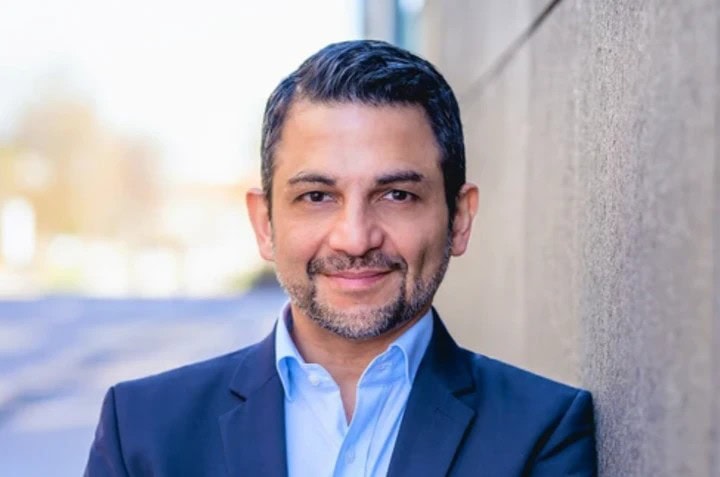
Artificial intelligence is fundamentally changing the insurance industry - from more efficient processes and new business models to personalized customer communication. But according to Hamidreza Hosseini, CEO of Ecodynamics, many insurers have not yet made the transition from pilot projects to productive use. The reason for this is that AI projects are often seen as technical experiments rather than strategic initiatives. Only when company management determines how AI should strengthen the business model can it have an impact. The decisive factor is in which products and processes AI creates measurable added value. To achieve this, data quality, technological architecture and organizational willingness to learn must be right.
Open enterprise architectures
The key lies in an open and integrated enterprise architecture that both strengthens existing processes and leaves room for innovation. Training and exchange promote acceptance, while governance and transparency ensure that AI projects can be managed and evaluated. Data protection and compliance are not a hindrance, but a prerequisite for trust. Successful companies are characterized by strategic foresight, a learning culture and clear prioritization.
Agent-based AI will change the insurance industry
A particular focus is on agentic AI, which, according to Hosseini, acts as a game changer. Today, these systems can not only automate routine tasks, but also control complex processes independently. Agentic AI connects various applications, analyzes data, operates programs and can prepare decisions at specialist or management level. This relieves employees, makes organizational structures more flexible and makes crises more manageable. In customer communication, agent-based AI enables more emotional, personalized interactions - for example through simulated empathy or linguistic adaptation to target groups. Trust is created when responsibilities remain clear and the use of AI is comprehensible. The aim is not to replace human work, but to supplement it with digital intelligence.
Improve visibility
According to Hosseini, the digital visibility of insurance companies is also undergoing a radical change. Studies show that classic SEO criteria such as backlinks or keyword density are losing their importance. Visibility in AI-based search systems increasingly depends on semantic clarity, technical readability, structured information architecture and comprehensible authorship. Insurers must therefore design content in such a way that it can be understood by machines - modular, transparent and networked. Those who continue to rely on unstructured websites or static PDFs will lose reach. Future visibility requires cooperation between IT, editorial and specialist departments as well as continuous adaptation to the logic of large language models.
AI-supported customer support
Another future field is hyper-personalization. AI can enable tailored offers and advice by analyzing context-related data in real time. Digital co-pilots accompany customers throughout the entire decision-making process and flexibly integrate insurance services into external platform ecosystems - for example in the areas of health or mobility. This creates new sales channels and business models. Nevertheless, there are technical and organizational limits: Fully networked, company-wide hyper-personalization requires robust data structures and proprietary, controllable models. Those who master this complexity will create a sustainable competitive advantage.
Human control remains indispensable
In underwriting and claims management, insurers face the challenge of combining efficiency with regulatory requirements. The EU AI Act and supervisory guidelines impose strict requirements on transparency, data quality and fairness. Companies must classify AI applications, document data sources and make decision-making processes comprehensible. Governance, audits and monitoring are mandatory. Hosseini recommends initially relying on supporting systems that relieve employees in risk analysis or fraud detection before automated decisions are introduced. Human control, explainable models and clear escalation paths remain indispensable.
Agile incident and risk management that reacts to deviations and learns continuously is central to sustainable success. Data protection and ethical responsibility have top priority. Hosseini emphasizes that innovation and compliance are not opposites: Those who combine the two create trust, strengthen their market position and exploit the full potential of AI.
No short-term trend
Hamidreza Hosseini does not see agent-based AI as a short-term trend, but as the key to a new era in the insurance industry. Success does not depend on technology alone, but on transparency, governance and a willingness to learn. Only companies that use AI strategically, responsibly and in an interdisciplinary way will really benefit from the change.
This article was created with the support of KI.
InsureNXT 2026
insureNXT is an international congress trade fair for innovation in the insurance industry. It provides a platform for insurance companies, start-ups, insurance service providers, industry partners and universities. In 2025, around 3500 participants, 150 partners and exhibitors as well as a line-up of over 200 speakers were on site in Cologne. insureNXT is looking for cross-industry solutions, new partnerships and business models that overcome the challenges of digital transformation and cultural change in the insurance industry. insureNXT is a joint event of InsurLab Germany e.V. and Koelnmesse GmbH. insureNXT 2026 will take place on May 20 and 21, 2026 in Cologne.
Further information: www.insurenxt.com