
Putting AI to the test: why 2026 will determine operation, scaling and governance
2026 marks a strategic turning point for many companies. Key future technologies - from artificial intelligence and edge computing to modern data platforms - are converging to form smart systems. These not only create operational efficiency, but also open up completely new business opportunities. At the same time, the demands on the IT infrastructure are increasing significantly. Dell Technologies highlights three developments that will have a significant impact on companies' planning and investment strategies in 2026.





Today, speed is no longer just a technological performance indicator, but also a synonym for a company's ability to adapt business decisions almost in real time. In industry, for example, intelligent systems continuously link internal production data with external information from supply chains or markets. They recognize risks such as machine breakdowns or changes in demand at an early stage and automatically adjust plans. As a result, production lines remain flexible, resources are deployed optimally and delivery commitments can be reliably met. Companies in the financial sector also benefit from continuously updated risk models. Transactions, market movements and customer behavior are analyzed in real time so that risk assessments can be recalculated on an ongoing basis. This increases responsiveness and compliance.
What does this mean in concrete terms? Dell Technologies takes a look at the three most important infrastructure developments around AI.
Trend no. 1: The IT environment is transforming into a modular AI factory
The implementation of AI projects requires an extremely scalable infrastructure, which is beyond the investment scope of many companies. For example, a powerful GenAI model may require hundreds of GPUs. Against this backdrop, a «Data Center as a Service» is an interesting alternative. Companies gain access to computing power on specialized IT without having to set up an infrastructure themselves. In principle, a hybrid approach has proven its worth, allowing companies to set up a kind of «AI factory». Edge systems take on latency-critical tasks, central computing environments serve as a training and management layer, while public cloud capacities are used for elastic scaling for less sensitive information. Data is therefore no longer moved to one environment across the board, but follows a rule-based model: Where does the greatest benefit arise? Where is the risk lowest? Where does processing make economic sense? The token-based economy in particular calls the long-favored cloud into question. While traditional applications usually generate predictable computing loads, AI workloads vary greatly. For example, a simple prompt only requires a few hundred tokens, while a comprehensive analysis consumes hundreds of thousands of tokens. That immediately adds up in the cloud. At the same time, the issue of digital sovereignty is gaining in importance. Data processing and model training must be designed in such a way that companies can control their value chain themselves at all times.
Trend no. 2: The AI economy is forcing a rethink of storage solutions
The success of AI applications depends not only on computing power, but also on the efficiency of the entire AI stack. This includes optimized vector databases, low-latency networks, scalable memory, intelligent routing mechanisms as well as security and governance layers. The aim is to organize model calls, retrieval processes and validations in such a way that the system not only works accurately but also conserves resources. The storage environment plays a special role here, as AI systems manage data sets of several hundred petabytes. Traditional storage architectures such as NAS, SAN or older direct-attached storage reach their limits in view of the high requirements for data aggregation and fast access to workloads. However, bottlenecks can also occur with a hyperconverged infrastructure, especially if the data is stored on different nodes. Storage and computing components must also always be renewed together, even though they have different modernization cycles. AI accelerates this costly cycle: GPUs usually have to be updated after just a few years, while HDDs are much more durable. Disaggregated architectures offer a solution here: storage and compute performance are decoupled. A shared storage level is available via a network, which can be used by all systems simultaneously.
Trend no. 3: Small models bring intelligence deep into the operational core
For a long time, the motto «the bigger, the better» applied to language models. However, this is often not the case in day-to-day business. Manufacturing is a good example of this. Small language models (SLMs) can be quickly integrated into production processes. Unlike large AI models, they can be trained within a few GPU hours for specific tasks such as recognizing deviations or evaluating maintenance reports. Techniques such as Low-Rank Adaptation (LoRA) help by integrating dedicated workspaces without having to retrain the entire model. Another decisive advantage is local deployment: SLMs can be operated directly on edge devices or in isolated OT environments, which minimizes response times and security risks. As a general rule, SLMs significantly reduce computing effort, energy consumption and cloud costs. Such compact models are indispensable for applications in the field of physical AI in particular, as self-learning, autonomous robots would not work without embedded intelligence. These robots recognize obstacles when transporting goods, for example, dynamically adapt routes and continuously learn from their environment - similar to human employees.

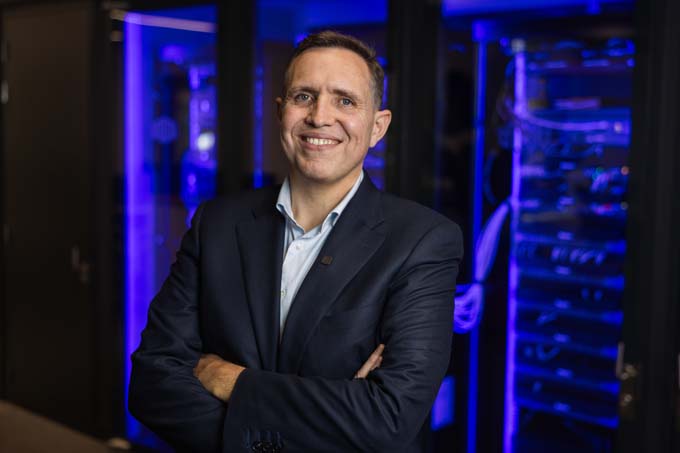
«2026 will be a year in which companies will no longer ask whether they are using AI, but how they need to rethink their technical and operational structures so that everything works to create value,» says Tim van Wasen, Managing Director of Dell Technologies DACH. «AI places high demands on the IT environment. This also means that companies have to find the right balance between speed, security and costs in order to reconcile the most diverse priorities and requirements.»
Further information: Dell Technologies