
SCSD 2026: Who sets the rules of the new world?
Europe's digital future is being decided in the here and now. On February 17 and 18, 2026, the BERNEXPO site will become the focal point of a debate that will decide on security, freedom and self-determination in the digital space.





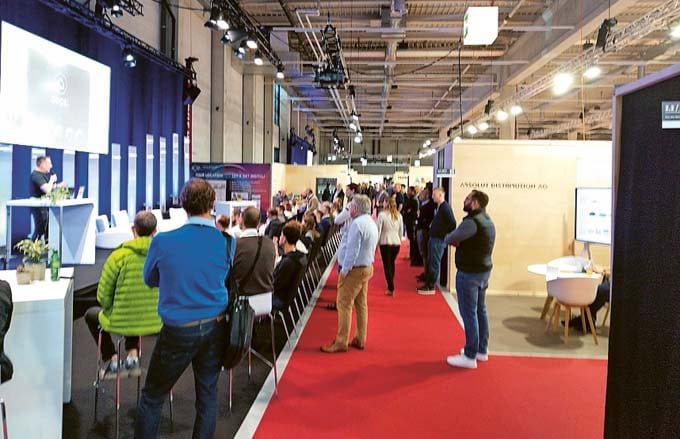
Under the motto «Digital Sovereignty - The New Frontier», the Swiss Cyber Security Days 2026 will bring together national and international figures to find answers to one of the most pressing questions of our time.
Digital sovereignty is moving onto the political and business agenda
The appearance of the United States of America at the World Economic Forum 2026 was an unmistakable signal: sovereignty, also and especially in the digital space, is moving further into the center of geopolitical, economic and social power issues. In this new reality, outrage is not a strategy. Neither for Europe nor for Switzerland. The Swiss capital will be at the center of this debate for two days on 17 and 18 February 2026. Top national and international speakers will negotiate the digital future - uncomfortably and relevantly, as the organizers promise. After all, digital sovereignty is no longer an abstract buzzword, but a strategic necessity. Who controls data, infrastructures and identities? Who sets standards, shapes dependencies or dissolves them? And how do we secure freedom, innovation and security in an increasingly networked but fragmented world?
National and international stars on the stage
When digital sovereignty, security and geopolitical reality come together, the result is an inspiring dialog of international scope. Leading minds from politics, technology, authorities, science and international organizations will come together on stage to provide answers to the central strategic questions of Europe's and Switzerland's digital future. The speakers at the SCSD 2026 include
- Florian Schütz, Director of the Federal Office for Cybersecurity BACS, on cyber resilience and state protection mechanisms
- Dr. Cristina Caffarra (EuroStack) on European digital independence and strategic autonomy
- Frank Karlitschek (Nextcloud) on open source applications and sovereign digital infrastructures for governments and authorities
- Dr. Jean-Marc Rickli (GCSP) on geopolitical power shifts in the digital age
- Prof. Dr. Dr. Oliver Hoffmann on the human mind, mental economy and resilience in cyberspace
- Prof. Dr. Touradj Ebrahimi (EPFL) on the importance of standards for technological sovereignty
- José Neves (Aerospace & Defense Cluster Portugal) on the role of industrial clusters in the European innovation and security architecture
- Bruno Giussani, long-standing European Director of TED, on technology, social responsibility and global discourse
- Nathalie Gratzer (NATO) on international security architectures
- Pavlina Pavlova (United Nations) on global cybercrime and multilateral counter-strategies
The programme will be supplemented by contributions from fedpol, the Federal Office of Justice and Google on e-identities, the Cyber Division of the FBI and other international organizations of key security policy importance. Future topics such as post-quantum cryptography and AI security round off the program and highlight the technological course that needs to be set today in order to remain effective.
Best practice and SME workshops
The transition from strategic classification to concrete implementation is made possible by the two curated Best Practice Stages. In practical experience reports, companies, authorities and solution providers will show how cybersecurity strategies and solutions are successfully introduced, operated and further developed in everyday life - from employee sensitization and incident response to the establishment of sustainable security structures.
The content is aimed at specialists and managers from SMEs and large companies as well as SMEs, authorities and user organizations. In the new SME zone, additional in-depth workshops on SME-relevant topics will be offered in cooperation with the Lucerne University of Applied Sciences and Arts HSLU. The Best Practice Stages and the workshops in the SME zone thus supplement the strategic conference program with the decisive element: practical implementation knowledge. A total of around 100 exhibitors will be presenting their products, services and innovations at this year's Swiss Cyber Security Days.