
Artificial intelligence: between data power and human rights
In an interview with the SAQ Swiss Association for Quality, Prof. Dr. Peter G. Kirchschläger explains why data-based systems are more than a purely technological innovation, what risks they entail and why the digital future needs clear ethical guidelines.





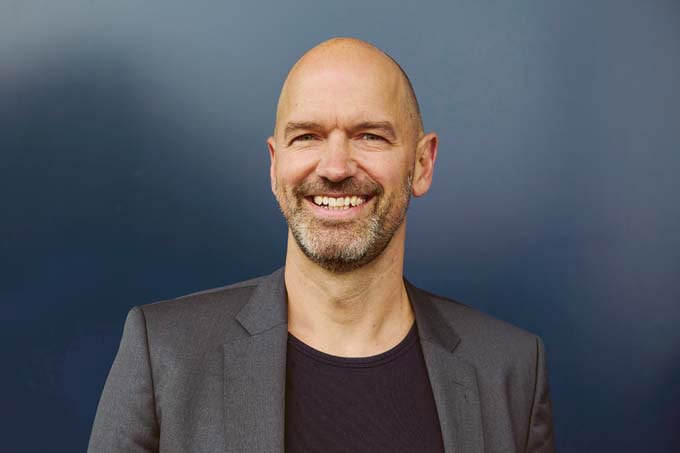
Prof. Dr. Peter G. Kirchschläger researches ethics, human rights and digitalization. He is one of the keynote speakers at the Swiss Quality Day on April 21, 2026.
Professor Kirchschläger, quality has long been strongly technical and process-oriented. Are we facing a new era of quality with data-based systems and digitalization?
Prof. Dr. Peter G. Kirchschläger: From an ethical point of view, we should continue to adhere to our quality standards when using data-based systems (DS) and therefore use DS specifically in those areas of intelligence in which DS exceed our cognitive capabilities. Where DS cannot keep up with us humans, we should keep our hands off DS.
You deliberately speak of data-based systems instead of artificial intelligence. Why is that?
«Artificial intelligence» is not real intelligence. It has neither awareness nor understanding of its own actions. Areas such as emotional and social intelligence as well as moral capacity also remain out of reach for machines. They collect, generate and analyze data. Everything they do is based on this data.
Where do you currently see the greatest risks in dealing with data-based systems?
The greatest ethical risks of DS are violations of data protection, privacy and copyrights as well as opportunities for political and economic manipulation. Added to this are the particularly underestimated ecological consequences of high energy and water consumption as well as human rights violations in the extraction of raw materials and production of DS at low-cost production sites.
You emphasize that technological systems must be based on human rights. What does this mean for companies that develop or use such systems?
For companies, human rights-based DS means ensuring that human rights are respected throughout the entire life cycle of DS. This requires government support and global regulation by an International Data-based Systems Agency (IDA) at the UN based on the model of the International Atomic Energy Agency (IAEA).
In your opinion, do we need ethical quality criteria for data-based systems?
A central task of the IDA would be a market approval process to ensure that no DS that violate human rights end up on the market. In other sectors such as the pharmaceutical industry, products are tested for harm to people and the environment before approval. This does not yet exist in the field of DS.
What should companies look out for when AI automates or redistributes tasks?
People should always have the last word in ethically relevant decisions. In addition, the results of DS must be comprehensible so that people can take responsibility for DS. Since DS reduces many paid activities, adjustments are also needed in the economic and social system. Based on my research, I propose a decoupling of work and income through a conditional basic income as part of the «Society, Entrepreneurship, Research-Time Model (SERT)». This model combines a basic income with a freely chosen contribution to society and at the same time creates incentives for innovation, research and entrepreneurship.
The rapid pace of technological development also raises fundamental questions about freedom, autonomy and meaning. What can ethics contribute to the current AI debate?
Unfortunately, today DS are mostly only used to increase efficiency and are dominated by a few multinational technology companies that confuse technological progress with their own interests. This threatens freedom, autonomy, the environment and the climate. Ethics can help to critically examine these developments and contribute to solutions so that DS can guarantee a humane and sustainable present and future for all people and planet Earth.
The motto of Swiss Quality Day (TSQ) is «Quality for the future: Sustainable. Digital. Human.». Where do you see the greatest tension and the greatest potential between these three terms?
Digital transformation and DS have the ethically positive potential to make our world more sustainable and humane. Unfortunately, this technological progress is currently going in the opposite direction. We urgently need to turn the tide and develop and use DS specifically for the benefit of humanity and planet Earth.
To conclude: What would you like visitors to take away from your contribution to the TSQ?
DS and digital transformation don't just happen, we humans shape them. We decide which DS we develop and use or do not use for ethical reasons. Not every innovation is ethically positive per se - just think of the atomic bomb. n
Author
Eveline Perritaz is a freelancer in the fields of communications, PR, marketing and business development. www.martix.ch
About the person
Peter G. Kirchschläger is Professor of Theological Ethics and Head of the Institute for Social Ethics ISE at the University of Lucerne and Visiting Professor at ETH Zurich. In his research, he combines topics such as digitalization, artificial intelligence, human dignity and justice. As an expert in human rights, he advises international organizations such as the UN, UNESCO and the EU and contributes ethical perspectives to politics, business and public debates.
Swiss Quality Day
The Swiss Quality Day was launched in 2008 by the SAQ Swiss Association for Quality. The aim of the event is to promote a cross-industry exchange on the topic of quality as one of the cornerstones of the Swiss economy. The next Swiss Quality Day will take place on April 21, 2026 in Bern.
Further information and registration: www.tsq.swiss