Quality management in the context of cultural change
Quality management is no longer just about compliance. Issues relating to corporate culture are becoming increasingly important. Continuous improvement processes are being replaced by continuous change processes and change management.
Thomas Bernard - April 02, 2026
A culture of transformation prepares people mentally for innovation and upheaval and makes it easier for them to adapt to a future that still needs to be shaped. (Image: France Qualité)
What are currently the most important quality issues in European companies?
Quality management in Europe is increasingly shaped by working conditions, digitalization, sustainability and resilience. The quality of employment - from mental health and work-life balance to security, autonomy and purpose - is a strategic factor. At the same time, data quality, responsible use of AI and cyber security are moving center stage. ESG criteria, CO₂ reduction and robust supply chains are increasingly helping to determine competitive advantages. In addition, there is a continued focus on lean, risk management and operational excellence, as well as the battle for talent, which puts the spotlight on the quality of leadership, development and employer attractiveness.
That's a lot of factors. Are there different priorities depending on the country?
Yes, and clearly so. In Germany, Industry 4.0, digitalization and cyber security are dominant topics, while in France the focus is primarily on quality of work, cultural change and compliance. In the Nordic countries, sustainability, well-being and participative organizational models are important. In Italy and Spain, the focus is on modernizing the industry, innovation and increasing skills. In Eastern Europe, the main focus is on standardization, certifications and generally increasing quality as well as rapid digitalization. In the UK, on the other hand, cyber security, risk management and performance - financial and operational - are the predominant topics.
Where do you see the biggest challenges in dealing with these issues?
In the next five years, the focus will shift away from pure compliance to resilience, technological competence, sustainability and human culture. Integrating AI and automation will be unavoidable. However, risks relating to data quality and the transparency of algorithms must also be considered, and new sources of error will arise. The ISO 9001:2026 revision will take these elements into account accordingly. At the same time, supply chains must become more resilient, transparent and ESG-compliant, while regulations such as CSRD focus on environmental and social performance. The revision of ISO standards also makes it clear that climate risks, social responsibility and management systems are becoming more closely interlinked. Last but not least, leadership culture, mental safety and the ability to keep complex management systems simple and coherent are becoming key touchstones.
You have published a comprehensive white paper on the culture of transformation. What was the trigger for this publication?
The publication of this White Paper was born out of a firm conviction: the ability to transform is not a one-off project, but a culture that needs to be built. And this culture cannot be imposed. It must be lived, developed and shaped coherently. Many transformation projects are highly equipped, but only deliver fragile or short-lived results. The reason for this lies less in methods than in the corporate culture, which is an invisible framework that either makes success possible or prevents it. We want to shift the discourse away from tools and programs to the underlying assumptions about power, mistakes, learning and collaboration. The white paper is intended to provide managers with an interpretation grid to better recognize diffuse resistance, fatigue and contradictions between aspirations and everyday life. At the same time, this publication emphasizes the human core of transformation - identity, status, psychological security - and advocates understanding change as a cultural task rather than a project.
Why is the topic of culture so important? And what do you think are the reasons why this topic has been given so little attention so far?
Companies talk a lot about strategy, key figures and performance. Culture, on the other hand, often remains a blind spot - only visible when it hurts somewhere. Culture can be described as a network of unspoken norms that deals with power, conflicts and mistakes and is often only addressed in crises or failed changes. We see the reason why the term „culture of transformation“ is so rare as follows: anyone who talks about culture asks questions about power, uncovers inconsistencies and symbolic contradictions between communication and actual behavior. What is new is the shift in perspective from talking about individual change projects to talking about an organization's ability to change in the long term. Transformation thus moves away from structures and processes to attitudes, dealing with uncertainty, mistakes and resistance - and ultimately affects the identity of the company.
In the white paper, you distinguish between «changement» and «transformation». The transformation of an organization requires individual willingness to change, to leave the comfort zone, as you write. What hurdles are particularly high in order to leave this comfort zone?
The idea of having to leave a comfort zone falls short of the mark. On an individual level, it is much more about the fear of losing competence, the threat to professional identity and the psychological tendency towards the status quo. This stands in the way of change. Collectively, there are invisible loyalties to traditions, founding figures or familiar recipes for success that make deviations seem like betrayal. Systemically, a dilemma arises when employees are expected to be agile and innovative, while reward systems promote control, conformity and competition. However, we see the lack of psychological security as the actual core resistance: without a protected framework, every courageous move out of the comfort zone becomes a personal risk.
Many companies have launched «change projects». How can these projects also have an impact on the corporate culture?
This is a strategic question. Organizations are constantly undergoing change projects: Digitalization, restructuring, mergers, new tools, new processes... But it is not enough to just change structures or tools. Instead of viewing culture as a by-product, it must be clear from the outset what cultural development is being sought. Projects should consciously focus on decision-making behavior, dealing with tensions, power distribution and recognition instead of limiting themselves to technical deliverables. The systems of recognition and remuneration have a decisive influence: only if they truly reward cooperation, learning and courage can the real culture shift. Managers, in turn, must set an example of the desired behaviour and create spaces in which team members can reflect on what a project reveals about the current state of the organization.
How can the quality of a culture be assessed? How can you recognize a «good» culture of transformation?
Speaking of a «good» culture must not be normative. In other words, the quality of a corporate culture should not be determined by buzzwords, but by its ability to learn and adapt. A sustainable transformation culture can be recognized by the fact that mistakes can be discussed openly, customer feedback can be processed seriously and contradictions can be addressed. It allows for uncertainty without falling into paralysis and ensures that communication and actual practice go hand in hand. Responsibility is decentralized, employees have real scope for decision-making and can take risks without fear of sanctions. Concrete indicators include : Meetings without drama, identifiable tensions, managers who actively ask for feedback and do not rely on heroic individual acts. In short, a good transformation culture is not a „cool“ or „benevolent“ culture, as is currently fashionable. It is a coherent, courageous, learning and responsible culture. A culture that can learn faster than its environment changes.
The white paper shows various approaches to how transformation could be implemented. How do you find out which approach is best suited to your own organization?
You must not fall into the trap of looking for a «good method». This gives the impression that there is a universal recipe. But this is not the case. It must first be clarified whether it is a matter of gradual adaptation, strategic disruption, crisis or slow cultural shift - and how mature the culture and organization are for this. The degree of maturity in terms of autonomy, psychological security and leadership culture determines whether the work can be top-down, participative or experimental.
In other words, it is advisable to combine different approaches ?
Yes, successful change combines a clear direction, genuine participation, open-ended experimentation and explicit cultural work. The decisive factor is that the chosen mix strengthens identity, clarity, accountability and trust - and interprets resistance as a valuable signal rather than a disruption.
What qualities do managers need to strengthen in themselves and in their employees in order for cultural change to succeed?
Above all, managers should develop the courage to enter into relationships and conflicts. They should admit their own fallibility and ensure that their words and actions match. A prerequisite for this is the ability to reflect in order to question one's own unconscious notions of normality and images of power. For employees, on the other hand, the aim is to promote responsibility, the ability to cooperate and emotional tolerance of ambiguity. As a cross-sectional competence, the focus is on „emotional maturity“ - the ability to regulate fear, not to reflexively fall into defensiveness and to engage in learning processes.
What were your own learnings when preparing the white paper?
The most important lesson we have learned from our work: Transformation rarely fails because of strategy, but because of a lack of coherence between aspiration, leadership practice, incentive systems and everyday behavior. Secondly, the emotional dimension of change is systematically underestimated, even though issues such as status anxiety, exhaustion and psychological safety are crucial for shared learning. Thirdly, culture is not a „soft“ issue, but a hard strategic factor that determines what is even possible in an organization. Many companies recognize themselves in the contradictions described above and demand methods, but quickly end up with questions about the courage and attitude of leadership. They are increasingly realizing that it is less about individual projects and more about a lasting ability to transform. In short, change does not begin with a plan. It begins with a change in awareness.
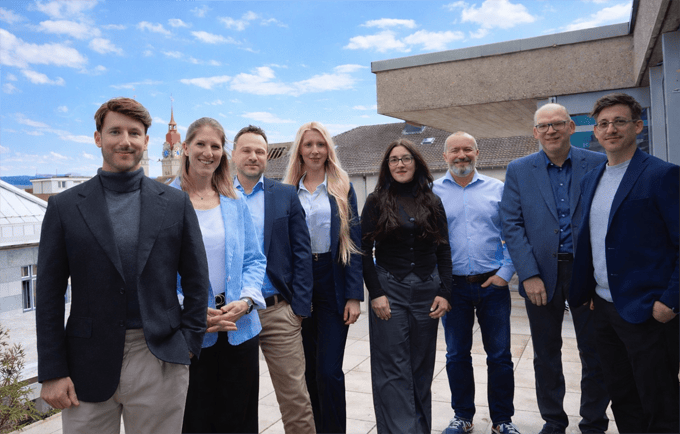
The interview partners
(c) Patrick Mongillon
Patrick Mongillon is Vice President of France Qualité and responsible for the international division, the think tank and Qualibord. He has almost 40 years of experience. As President of AQM Performance, he deals with strategy, organization and individual and collective performance.
(c) Jade Plantin
Jade Plantin is an executive coach and organizational coach with dual expertise in the areas of organization and human resources. She has more than 30 years of experience in supporting transformation processes to align organizations and talent.